The Empress
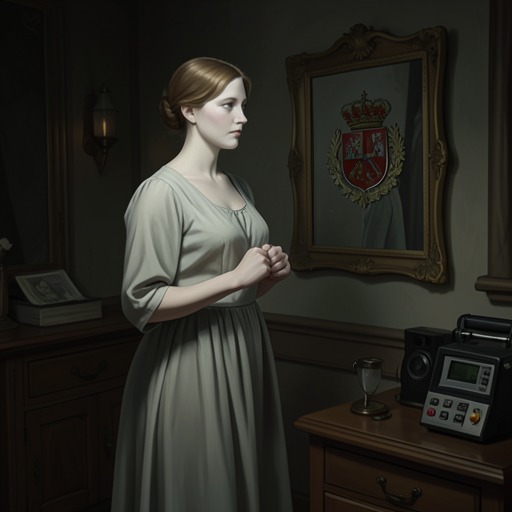
His Property (A Dark Vampire High School Bully Romance) (Vampire Boy Swords): Prince of Londinium (Dead Sun: Prince of Londinium (A Dark High School Bully Romance) (Vampire Boy Swords) Book 1)The Empress is the lost sovereign whose death becomes the hidden political crime at the center of Clara Driscoll’s revelation. Although she is absent from the ball and appears only through testimony and memory, her rule explains why Clara’s body, ancestry, and potential inheritance make her dangerous to the Emperor and desirable to rival claimants. The Empress’s legacy represents a form of royal authority that combined bloodline, supernatural power, reproductive continuity, and protective governance.
Identity and Royal Lineage
The Empress belonged to the later history of the Taleians, a people divided in ancient Briton from the Druids and distinguished by extraordinary physical and psychic gifts. Their older monarchy was associated with Queen Morrigan and the Knight of Swords from the Breannin Clan, while the later Empress emerged after the Taleian population had been transformed and scattered. Her birth therefore marked a historical restoration as well as a dynastic turning point: another Queen was not born until 1893, and this new royal line arose from the union of a Taleian male and a human female.
The Empress was not simply a conventional monarch. She possessed the DNA strands of all her people, making her body a repository of collective identity and a source of political legitimacy. Her position joined biological inheritance to sovereign authority: whoever controlled knowledge of her descendants could influence the future of the Taleians and the status of Taleian-human hybrids. Clara’s discovery that she was the lost Empress’s child consequently overturns her understanding of her own life and makes her supposed upbringing in 1987 part of a deliberate concealment rather than an ordinary family history.
Rule and Political Order
According to Prince Octavius, the Empress governed wisely with the Five Princes. The Book of Talus identified designated mates from birth, and those chosen partners served not only as intimate consorts but also as advisors who guarded the Empress’s immense power and kept her loved and safe. Her government thus depended on an interlocking structure of dynasty, supernatural selection, and personal allegiance. The princes were both companions and instruments of political protection, and the mate system helped organize the ruling group around the sovereign.
This remembered order is contrasted directly with the Emperor’s regime. Octavius describes his father as cruel and jealous, a ruler determined to erase every reminder of the Empress’s rule and of the period in which hybrids and alien arrivals helped the Taleians survive their evolution. The conflict is therefore not merely between two generations of royalty. It is a struggle over which history will be treated as legitimate: the Empress’s inclusive, protective dynastic order or the Emperor’s effort to suppress its symbols, records, and heirs.
Murder and Erasure
The Empress was murdered by the Emperor, who also arranged the deaths of her child and the Princes. Octavius presents this as a calculated destruction of an entire governing structure rather than an isolated killing. By eliminating the sovereign, her heir, and the advisors bound to her, the Emperor removed both the living representatives of the old order and the people most capable of preserving it.
The crime is especially significant because the Empress’s child survived. Clara Driscoll was somehow stolen and hidden in 1987, centuries before Londinium existed. When Lord Byron Phraeon reveals the possibility of her true identity, Clara understands that the family and memories she had taken for granted were false or incomplete. Her father’s apparent dislike acquires a new explanation, while her existence becomes evidence that the Emperor’s attempt to extinguish the Empress’s line failed.
Legacy in Clara’s Body
The Empress’s inheritance reaches Clara through more than a royal name. Prince Octavius senses that Clara has the psychic gifts of a Taleian hybrid, although she has not yet completed the change into a vampire. Taleian-human hybrids do not assume their true vampire form at birth; they undergo a later awakening, appearing no older than twenty-five. Clara’s uncertain condition therefore reflects the biological history created by the Empress’s era, while also making her a living continuation of the line the Emperor tried to destroy.
The Empress’s legacy also shapes the rules being imposed on Clara. The Book of Talus assigns fated mates, and the ancient bonding ritual requires several duels before the chosen pair can be joined by blood. The ritual establishes a psychic bond in which the partners’ thoughts flow as one; only afterward does the male bite the female. Darius Constantine insists that challengers must fight before the winner can claim Clara with a bite and brand, turning the Empress’s old dynastic system into the immediate mechanism through which men compete for her.
Narrative Significance
The Empress is absent yet structurally omnipresent. Her murdered body is never encountered in these scenes, but her blood, political program, and erased household govern every revelation about Clara. The Emperor’s violence gives the romance plot its lethal stakes, while the Empress’s former rule supplies the lost alternative against which the present court is judged.
Clara’s reaction makes the Empress’s significance personal as well as political. Learning that she may be the hidden heir leaves Clara sick, angry, anxious, and desperate to escape the competing claims of Octavius, Darius Constantine, Carter, and Byron Phraeon. Her uncertainty about whether she can want more than one man also recalls the Empress’s five consorts, suggesting that the old royal order allowed forms of intimacy that the current regime has converted into possession and combat. The Empress therefore survives in the narrative as a contested model of sovereignty, kinship, and protection—and as the still-living source of the inheritance that threatens to expose the Emperor’s rule.